
The food sector and the crane equipment industry


Introduction – Challenges and requirements of modern food production
In the food industry, where food safety and high hygiene standards are essential, manufacturers must face increasingly stringent requirements. Quality control systems, such as HACCP, are the foundation for preventive action and their implementation requires not only meticulous procedures but also modern technologies supporting both process monitoring and maintenance of cleanliness in plants. In the face of market globalisation and growing competition, processing companies invest in advanced cargo transport and lifting systems to ensure efficiency and operational reliability.
Advanced technologies in hygiene and safety
HACCP systems and real-time monitoring: The implementation of HACCP procedures requires continuous monitoring of key critical points. With the integration of IoT (Internet of Things) systems, it is possible to collect real-time data from sensors mounted on production lines. Smart systems analysing environmental parameters, such as temperature, humidity or the presence of chemicals, allow immediate response to potential risks. These solutions not only improve hygiene standards, but also reduce operating costs by optimizing maintenance processes. Automation and robotization of production processes: Increasingly, processing plants integrate robotic systems that support warehouse and production work. Robots working with crane devices are used for precise handling of heavy loads such as BigBag bags, fryers baskets or evaporators. The automation of these processes allows not only to increase efficiency, but also to minimize human errors, which is crucial in the industry with high sanitary and hygiene requirements.
Modern crane equipment – the foundation of efficiency in food logistics
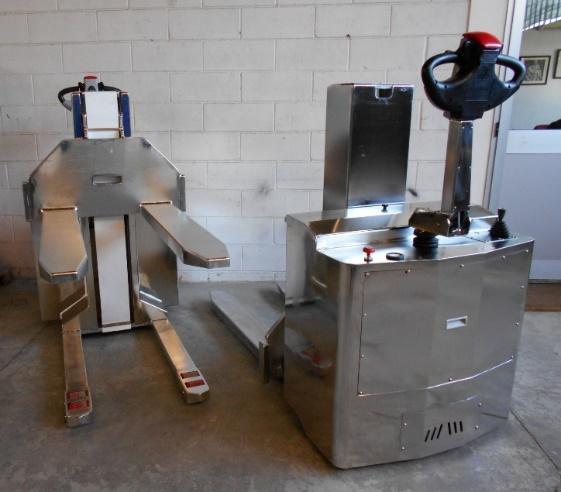
Pallet trucks and scissor lift tables:
Pallet trolleys are a basic tool for transporting palletized products. Their modern designs allow for easy integration with production lines, and the use of control systems allows automatic movement of goods within the plant. Scissor lift tables, used in both production and storage processes, guarantee ergonomics and safety of operation. Modern models are equipped with collision sensors and automatic braking systems, which significantly increases the level of operational safety.
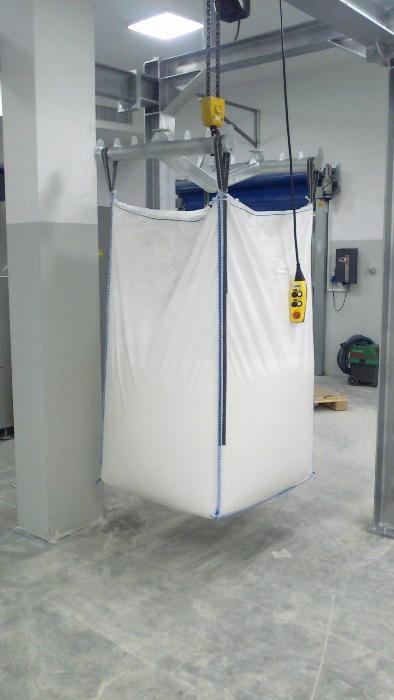
 BigBag lifts and chain hoists:
Specialist devices dedicated to handling BigBag bags are used for the transport of loose materials such as flour or corn. Thanks to the use of stainless construction elements and technologies resistant to aggressive chemicals, these devices are reliable even with an intensive work cycle. Chain hoists, in both manual and electrical versions, allow precise lifting and lowering of heavy loads, and their design is designed to withstand corrosion and minimise the risk of mechanical damage.
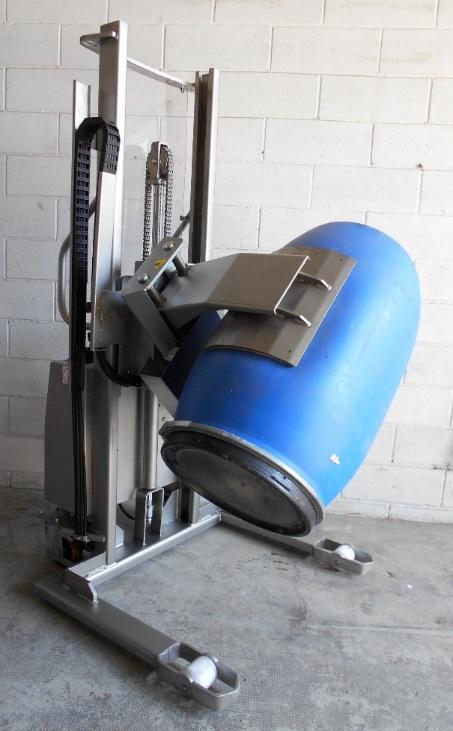
 Lift trolleys and vacuum systems:
In warehouses and production halls, lift trucks are often used to handle barrels and liquid containers. As a result, the transfer and mixing processes of products are carried out in a safe and efficient way. In addition, innovative vacuum lifters allow precise gripping of irregular-shaped products such as blocks of cheese, butter or frozen foods. These systems, often equipped with additional anti-slip protections, increase work ergonomics and minimize the risk of product damage.
Use of stainless steel (INOX) and specialised materials
Material selection – key to longevity and hygiene: Stainless steel, also known as INOX, is the first choice material in the food industry. Its exceptional corrosion resistance, ease of cleaning and high durability make it ideal for applications in environments requiring high sanitary standards. INOX steel equipment is resistant to strong bactericidal agents, which guarantees safety and long-term use even under the most demanding production conditions. Specialist materials and ATEX technologies: In areas where there is a risk of sparking and potential explosion, such as the processing of loose products, it is essential to use ATEX-compliant devices. This equipment, including chain hoists, pole cranes or scissor lift tables, is designed to minimize the risk of explosion. The use of specialised coatings and materials resistant to bronchodilation ensures that equipment can be safely used in endangered zones, which is invaluable in the food industry.
Integration with Industry 4.0 systems
Automation and digitisation of processes: The Industrial Revolution Industry 4.0 introduces a number of innovations that are also applicable in the food sector. Integrating cranes with production management systems enables complete digitization of logistics processes. Advanced software allows you to automatically plan routes in warehouses, monitor the technical condition of equipment and analyze production data, which translates into increased efficiency and optimization of resources. Internet of Things (IoT) – revolution in monitoring and maintenance: IoT sensors, mounted on crane devices, allow continuous monitoring of operating parameters such as energy consumption, vibration or operating temperature. The analysis of these data enables the prediction of failures and planning of maintenance in a proactive manner. Such solutions minimise the risk of unplanned downtimes and increase operational efficiency, which is particularly important in the food industry, where each minute of downtime can affect product quality.
Industry curiosity and case studies
Case study – automation of a warehouse in a dairy establishment: One of the leading dairy companies in Europe has decided to implement an integrated warehouse management system based on automatic lift trucks and transport robots. Thanks to this solution, the company reduced loading and unloading times of products by more than 40%, while significantly increasing the level of safety at work. The implementation of the IoT system also allowed to monitor the technical condition of the equipment on an ongoing basis, which contributed to reducing service costs. Innovative transport systems – the use of collaborative robots: In processing plants, collaborative robots are increasingly used, which operate in close proximity to people. These intelligent systems not only perform repetitive tasks, but also adapt to changing production conditions. Thanks to the use of safety sensors and machine learning algorithms, these robots minimize the risk of collision and increase work ergonomics, which is extremely important in a dynamic food production environment. Eco-innovation in food logistics: In response to growing sustainability requirements, lifting equipment manufacturers are actively developing solutions that reduce energy consumption and noise emissions. Modern electric drive systems and energy-efficient control technologies help reduce the carbon footprint of the entire production plant. Such innovations are especially valued by businesses wishing to demonstrate their commitment to environmental protection.
Prospects for industry development and challenges for the future
Development of industry standards and standards: With the development of technology, there is also a growing need to create uniform standards for health and safety at work in the food industry. International organisations and national regulatory agencies are constantly updating the guidelines, which requires manufacturers of crane equipment to continue to innovate and adapt to new standards. Cooperation with experts and research on materials and control systems are crucial to meet market expectations. New technologies and ergonomic challenges: As automation grows, it becomes equally important to provide ergonomics for crane operators. Designers must take into account not only technological efficiency, but also safety and comfort of use. Research on ergonomics, supported by biomechanical analyses, allows the creation of systems that reduce the risk of employee injuries and overload. Digital integration and cybersecurity: In the Age of Industry 4.0, where data collected by IoT sensors are crucial to maintaining production continuity, there is a growing threat of cyber attacks. Therefore, manufacturers of management systems and crane devices invest in cybersecurity solutions that protect against unauthorized access to critical data. These investments become an indispensable element of industrial infrastructure, especially in the food sector, where system interruptions can have serious consequences.
Summary – Safe and efficient future of the food industry
The food sector, due to its specific sanitary and hygiene requirements, benefits from modern solutions of cranes, which significantly increase efficiency and safety at work. From pallet trucks and scissor lift tables, specialist BigBag lifters and vacuum systems to certified ATEX equipment – each piece of equipment is designed to minimize risk, optimize processes and support innovative automation and digitalisation solutions. The integration of advanced technologies such as IoT, robotics and cybersecurity systems is the foundation for the future of the food industry. Thanks to continuous cooperation with experts, investments in research and adaptation of the latest technological trends, manufacturers can not only meet current requirements but also anticipate future market challenges. If your company is looking for solutions that increase production efficiency, ensure the highest hygiene standards and safety at work, our offer is a response to these needs. Contact us to learn the details and select devices tailored to your requirements. CONTACT US!
