
Ergonomics on production


Clear procedures and securely designed workplaces translate into increased productivity of the entire company. Of course, more and more burdensome works on production lines or in warehouses do machines or simple robots for us. However, man remains the most important element. According to data provided by the Department of Labour in e.g.: U.S., the physical injuries of workers due to lack of ergonomics cost US taxpayers an average of $15-20 billion a year. At the same time, the British Labour Safety and Hygiene Inspection reports that approximately one million people with skeletal muscle injuries from non-ergonomic workstations are arriving in Britain every year.
What exactly does the implementation of work ergonomics rules translate into?
1. Cost reduction
Systemically reducing risk factors translates into fewer accidents, thus reducing the costs associated with them. Less accidents – fewer downtimes, less repair of machines that are associated with accidents and more availability and productivity of the staff team. According to the US Bureau of Labor Statistics, the average total cost of a workplace injury in the USA is 51 thousand dollars and involves at least 12 days of employee absence.
2. Increase in productivity
A more ergonomic workplace is a more efficient workplace. If doing a given activity requires less effort, it is more comfortable and the person responsible for carrying out the task feels safe – productivity must increase.
It is also worth paying attention to the continuity of work resulting from fewer injuries. This facilitates better organisation of jobs in the cooperation of employees and management cards.
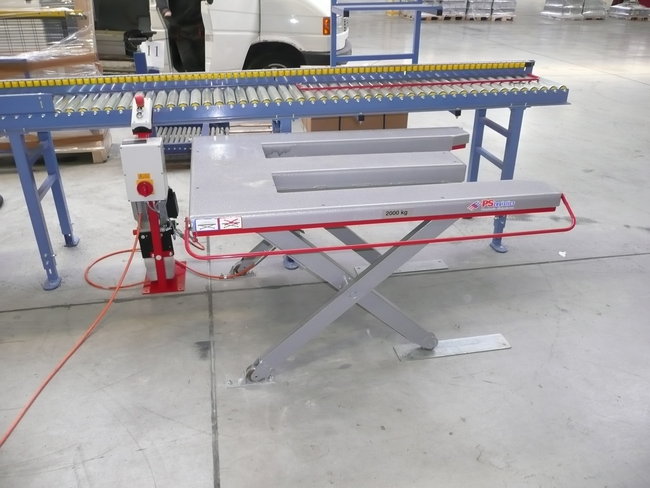 Ageing of the population is also very important. In the labour market, there is a tendency to increase the participation of people over 50 years old who, due to their age, have some natural limitations and especially require that their workplaces be optimised for ergonomics.
3. Quality improvement
On the other hand, a poorly designed workplace translates into growing frustration for workers who feel that the activities could be done more effectively. Frustration and fatigue sooner or later translate into mistakes, for which the whole company is ultimately responsible.

How to introduce work ergonomics rules?
1. Review the risk factors
The first step to be taken before any other action is to review the risks that occur in the workplace.
The most common risk factors are:
- repetitive movements,
- movements requiring heavy force,
- activities requiring unusual body posture,
- fast movements,
- vibrations, high pressure,
- low or high temperatures.
Collect information on the activities carried out by employees:
- the weight occurring during the performance of the activity,
- the time and distance of its execution.
Check and compare these values with the current safety guidelines. Specify critical stature types – in which the muscle-skeletal system of the worker is charged to the greatest extent e.g. back tilt, crouching. Prepare photos and short films in which the correct and incorrect body posture will be presented during various activities.
2. Select non-ergonomic workplaces
No one knows as well whether the workplace is optimal or not, like a person who has daily contact with him. Therefore, in order to achieve the goal set out in this point, it would be best to talk to team leaders and operators.
3. See how you can increase work ergonomics without investment
Sometimes with a few simple steps you can significantly increase the level of safety. Analyze whether you can reduce the worker’s burden at a critical moment, by reducing the weight of goods carried, lowering the distance or assigning an additional employee or equipment to the workplace.
Develop new rules
The next step to be taken is to develop new rules and procedures that will address previously identified threats. In many cases, to reduce risks, it is enough to train workers properly, instruct them about how they should do their job optimally.
Regularly update procedures
Building a company – based on the principle of working ergonomics, is not an event, but a long process. Therefore, a timetable should be established for the updating of procedures, regular job reviews and risk factors, new safety training.
4. Invest in more ergonomic workplaces
Of course, the mere development of rules and procedures or the introduction of non-expenditure optimization is not enough. If the workplace does not meet safety requirements due to underinvestment, even the best rules or ideas will not help. That’s why you need to be ready to allocate some funds to increase ergonomics. It is good to do this by reviewing all jobs and setting priorities for where jobs should be started, as they represent the greatest threat.
5. Engage your employees to optimize your workplace
No one knows the dangers that occur in the workplace as well as those who spend a few hours a day with him.
How can you involve employees?
- conducting interviews,
- analysis of the work process,
- create prototype solutions using cheap materials such as cardboard and then test them with employees for ergonomics,
- developing a list of all equipment elements that can contribute to increased productivity and ergonomics,
- find out if the employees in a given position are legal/left-handed or whether the workplace requires height adjustment.
Ergonomic workplace should:
- be adapted for smaller and larger people, with the possibility of adjustment, depending on, among others, height or weight,
- allow the worker to take a comfortable and stable position,
- have a chair/sofa with adjustable capacity,
- allow both sitting and standing,
- as part of the possibility to use gravity instead of muscle strength to move materials,
- have a vision-adjusted monitor,
- have clear and clear safety messages,
- have adequate temperature and moisture levels.
Of course, these are not all potential threats that may occur in the workplace. In addition, it should be borne in mind that they are not only found in warehouses or in halls production. They also need to be taken into account in the office – a poorly organized workplace in such a place can lead to trauma Spinal or, for example, carpal tunnel syndrome.