
Retractors: Types and construction.


The hoist is one of the most important elements of each crane – in fact it is responsible for lifting and lowering the load transported by the crane.
The hoists can be divided by:
Type of hoist:
- cable
- Chain
Power source:
- Manual
- Electrical
- air
- hydraulic
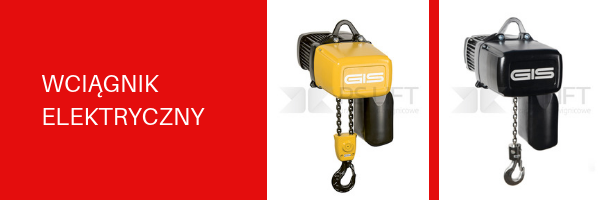
Chain hoists are characterised primarily by a compact and mobile structure, which allows to save large space. Chain made of steel, moves thanks to the mechanism of gear wheels. Chain hoists can be equipped with any length of the chain. They can be powered manually, Electrical, pneumatic or hydraulic. They are most commonly used to lift lighter loads – unlike rope hoists. A significant advantage of this type of hoist is their price, which is much lower compared to rope hoists.
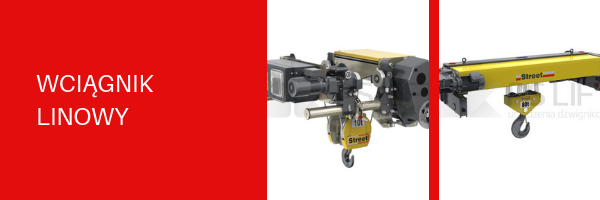
Wire rope hoists They work very quietly and smoothly. Their work is faster than in the case of chain hoists. These hoists lift the charge on a steel line, which is rolled onto the drum. However, the rope consumes faster than the chain, and the design itself is much larger compared to chain hoists. Cable hoists can be electrically or pneumatically driven. They are most commonly used in large industrial plants and wherever the speed of lifting a load matters, work is done at high altitude or very heavy loads are transferred.
Hand hoists they have a simple design, allowing easy and cheap maintenance, cleaning and control of the condition of the device. Their small size and compact design make it possible to work even in small rooms. They will work perfectly in places where for various reasons there is no access to electricity.
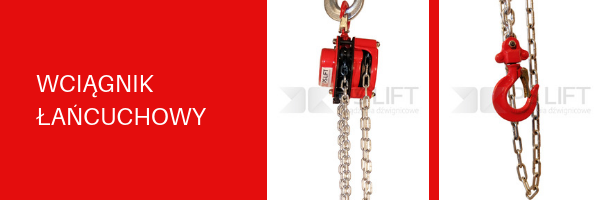
Two types of hand hoists are distinguished – chain hoists and lever hoists.
- excellent for applications in construction, automotive, industry and various types of maintenance.
- The most common occur with a load capacity of 500 kg to 10 t.
- fastened to a special beam or trolley will be successfully ideal for lifting loads.
- made of steel construction, they provide durable use and impact resistance.
- They are also available in stainless and explosion-proof versions of ATEX.
Hand lever hoists
- They will work in the construction, industrial and maintenance industries.
- their design allows the load to be moved horizontally and vertically.
- the load capacity is usually between 500 kg and 9 t.
- These kind of hoists are easy to install. The lever rotates 360 degrees.
- they have a compact and mobile design, so that they can be used in small rooms.
Electric hoists come in a string and rope version. The gears responsible for the movement of the lift shall be driven by an electric motor. The control of the hoist shall be carried out by means of a control tape on the cable or by radio control. The most commonly used voltage in Poland is 1 x 230 V or 3 x 400 V.
The exception is some steel mills, rolling mills, mines where there is a voltage of 500 V.
Electric chain hoists they are most commonly used in the manufacturing industry and in industrial facilities. Particular attention should be paid to the intensity of work and load.
Electric cable hoists are used most often in industrial plants. They are in light as well as heavy constructions.
The life of the hoist depends on the selection of work intensity in relation to the actual conditions:
- load capacity
- lifting frequency
- lifting height
- operating temperatures
Air hoists They are powered by compressed air. Unlike electric hoists, pneumatic hoists can operate continuously because the air additionally cools the engine during operation. Air hoists are resistant to temperature fluctuations, so they can be used in extreme and variable ambient conditions, e.g. where there is very high humidity or the device has contact with water, as well as in flammable environments (e.g. car paint shops) where there is a risk of explosion. Air hoists are also ideal for industries such as mining (especially drilling platforms and offshore).
They are best suited, for example, in the textile or wood industries, where compressed air is commonly used in the production process.
Air hoists are designed to work in heavy industry plants and production halls, because they work well at high speed and intensity. Nor can it harm them to run and shut down frequently. They can have a very large load capacity – up to 100 tons.
Hydraulic hoists can be used as an alternative to pneumatic hoists and can work anywhere with hydraulic lines or central hydraulic systems.
They are used in areas at risk of fire or explosion. They are distinguished by quiet work and sensitive, stepless adjustment of lifting and driving movements. They are most commonly found in a load capacity of 3 to 50 t. They have a very robust transmission system.
Mode of suspension of hoists

The hoists can be mounted in different ways. They are usually placed on a special trolley where they move on the beam.
The hoist can also be hung on the upper hook to a fixed point on the structure.


