
What’s a chain hoist for? Various applications of chain hoists


The chain hoist is a versatile crane device that allows you to effectively lift and lower heavy loads. Understanding the mechanics and types of chain hoists allows you to choose the right device for a specific application.
Applications Chain hoists
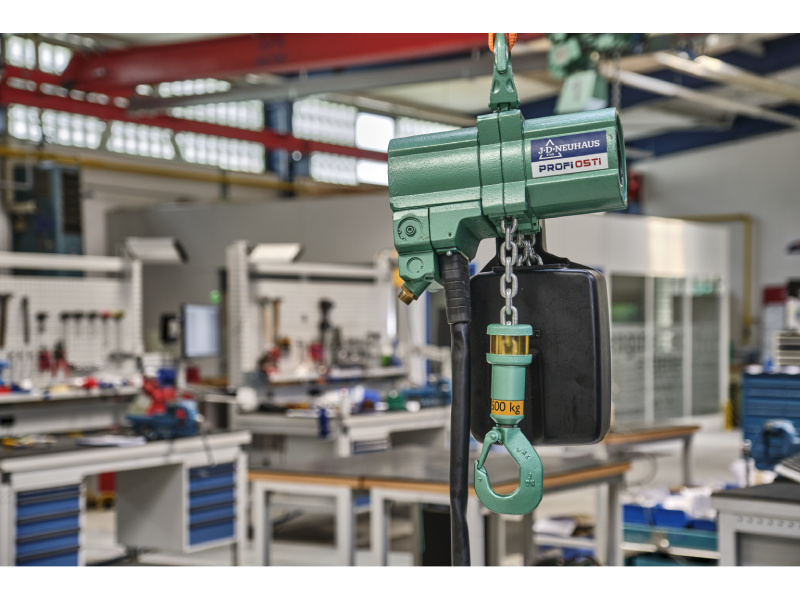 Chain hoist components
The main elements of the chain hoist:
-
- Manoeuvring chain: The chain used by the user of the hand hoist to put the load in motion. It goes through a small gear wheel inside the hoist housing.
- Control tape: A tool that allows you to manipulate the load with buttons, suspended on the hook of an electric hoist.
- Carrying chain: Chain finished with a hook, used to lift the load. It passes through the larger gear inside the device.
- Upper hook: Attachs the hoist to its carrier structure, e.g. beam or carriage.
- Bottom hook: Attached to the lifting load.
- Security of the hook: Safety mechanism (fall) which prevents the hook from detaching from the beam, carriage or load.
- Puller body: The main housing, including the lifting mechanism and components, provides structural support and device protection.
- Hand chain hoist transmission: Inside the housing there are two gears – smaller, connected to the hand chain, and larger, connected to the load chain. The movement of one gear causes the other to move.
- Brake: A built-in brake mechanism that holds the load and prevents it from moving or falling when the user stops pulling the hand chain.
- Electric winch engine and clutch: the components of the electric hoist, responsible for putting the load in motion and setting the appropriate load capacity of the hoist.
How It Works Chain hoist?
The carrier chain has a hook that is connected to the load. In the case of a manual chain hoist, the user pulls the hand chain, which causes the load to be lifted or lowered. In electric or pneumatic hoists, this operation is performed by an electric or pneumatic motor and the operator then uses a control tape by pressing the appropriate buttons.
Types of chain hoists
- Hand-held chain hoists
- Description: Hand-operated, do not require external energy sources.
- Benefits: Portable, light, easy to transport, easy to use, low costs.
- Errors: Reduced lifting capacity, low lifting speed, require physical strength, which can be tiring with heavier loads or longer use.
- Electrical chain hoists
- Description: Electrically powered, equipped with an electric motor.
- Benefits: Quick load lifting/release, precise control, no physical force required, time saving, more efficiency.
- Errors: Dependence on electricity, higher costs compared to hand hoists.
- Pneumatic chain hoists
- Description: Powered by compressed air, they use a pneumatic engine.
- Benefits: Safe in areas at risk of explosion, robust, durable, smooth speed adjustment.
- Errors: Dependence on the source of compressed air, higher costs.
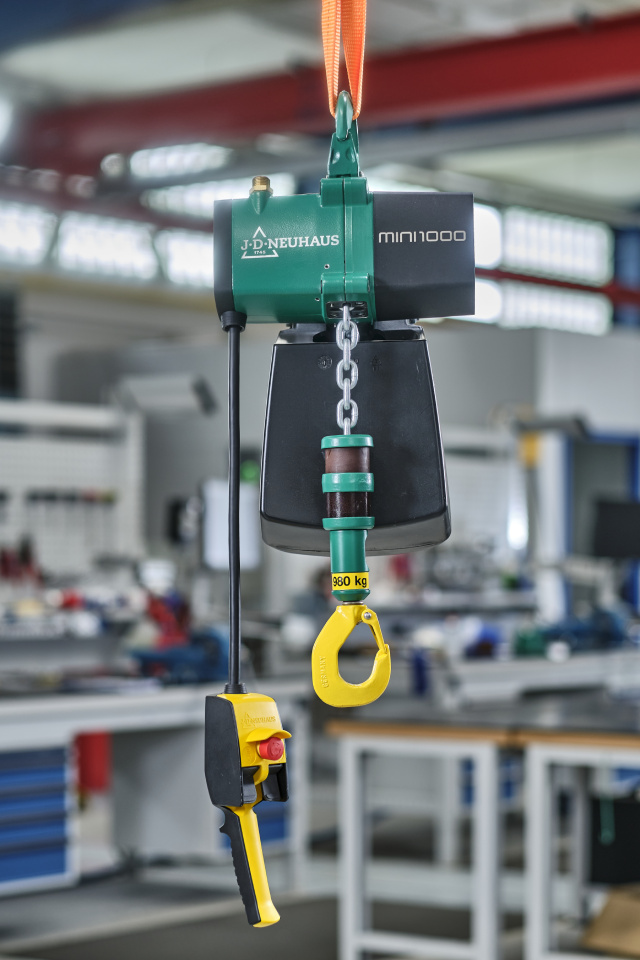
Chain hoist applications in different industries
- Construction
- Application: Raising construction materials and tools to higher heights. Hand hoists – ideal for places without access to electric power supply.
- Production plants
- Application: Optimising production lines, especially when handling heavy components. Electric hoists can be integrated with jib cranes and overhead cranes.
- Storage and handling of materials
- Application: Shipment of supplies, precise placement of goods in tight spaces. Electric hoists accelerate work, and hand-held hoists are used where lifting is less rare.
- The automotive and aviation industries
- Application: Precise installation of heavy parts during the assembly of vehicles and aircraft. Air hoists are ideal in environments sensitive to sparks.
- Oil, gas and mining industries
- Application: Working in difficult conditions, lifting heavy drilling equipment and raw materials. Electric and pneumatic hoists are irreplaceable.
Routine maintenance and inspection
- Daily inspection:
- Verification of visible damage or wear.
- Testing of brake functions before each use.
- Regular maintenance:
- Cleaning and lubrication: Regular cleaning and lubrication of the chain ensures its unfailing operation.
- Bearing grease: Bearings must be lubricated and sometimes require dismantling and reviewing, usually once a year or more depending on use.
- Professional inspection:
- Planning of professional inspections in accordance with the safety standards and instructions for use provided by the manufacturer.
Summary
Chain hoists are irreplaceable in many industries thanks to their versatility and ability to lift heavy loads. The choice of the appropriate type of hoist depends on the specific needs of the user, the type of cargo and the working conditions. Regular maintenance and compliance with safety regulations ensure the long-term and unfailing operation of these devices. If you have additional questions or need help in choosing the right hoist, our experts are at your disposal!
