
Advantages of belt slings


Webbing slings, Like chain and rope, they belong to a widely understood group tug suspension. Each of them meets similar user expectations and mediates between crane devices, such as overhead crane is jib crane, and transported loads.
This type of ancillary equipment is universal because it can be used in all industries. In any production or transport company in which it is necessary to transport an uncomfortable, heavy, or large-sized range of products, drag slings are used.

Application of belt suspensions
Using belt slings has many advantages.
The most obvious use of belt slings is multipoint suspension of the load. But that’s not all the suspension work can offer us.
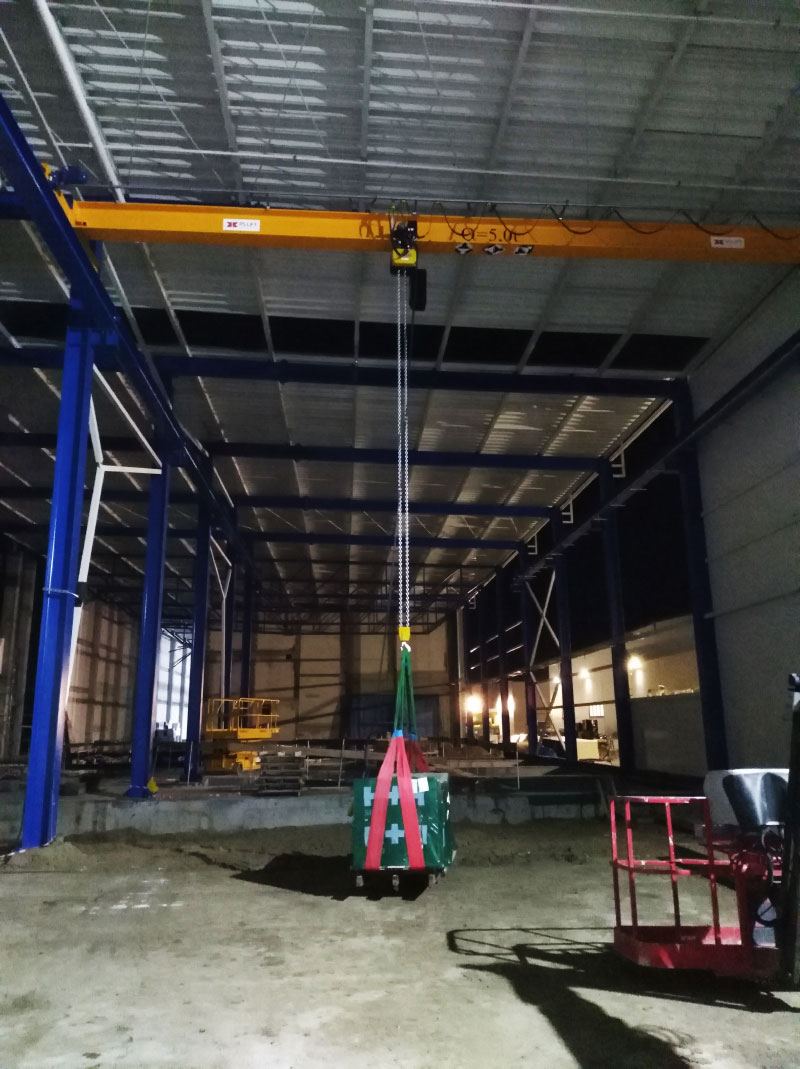
The crane or overhead crane operator may, by means of belt slings, bind, tie and hold the product transported.

What kind of load will be suspended depends on the company’s characteristics, most often these are non-standard and large size loads. These can be loaded pallets, heavy components, steel structures, wire coils, and many more.
What distinguishes belt suspensions
Belts are very flexible and light. Low weight does not affect their strength. The belt slings are as strong as rope and chain slings.
For workers who work ‘in the field’ and use belt slings in different places, an additional advantage is to be able to wrap them up and transport them to the destination. They take little space and are light, having a large advantage over the rest of the tug slings. Compared to rope or chain slings, they will also be the best choice when we work with elements with a delicate surface. They are also the most resistant to the effects of chemicals, including acids, thanks to the material they are made of – polyester.
Authorisations and maintenance
UDT certificates are not needed to handle suspensions. Periodic examinations carried out by trained and qualified persons in this respect are mandatory.
Standards that impose the obligation to carry out research are widely available. The periodic check must be carried out once a year at single shift work. The scope of the studies is:
– Current review, or visual evaluation,
– a detailed review, in which, in addition to visual inspection, measurements of deformations and extensions of suspension elements are carried out. It is checked that there have been no cuts, cuts of deformations, dilating of hooks, extensions or cords or chains, etc.
– load test, during which the authorised person charges the suspension for a minimum hour (of course, the load depends on the load required by the suspension).
It is clear that suspensions must not be used when the elements of the suspension have been deformed, twisted or bent, the rope has stretched, microfractures or grooves are visible.
Types of terminations
There are several options for ending the belt sling. They can be endless, with a closed circuit or end with bilateral loops, sewn-in links and hooks.

Load capacity
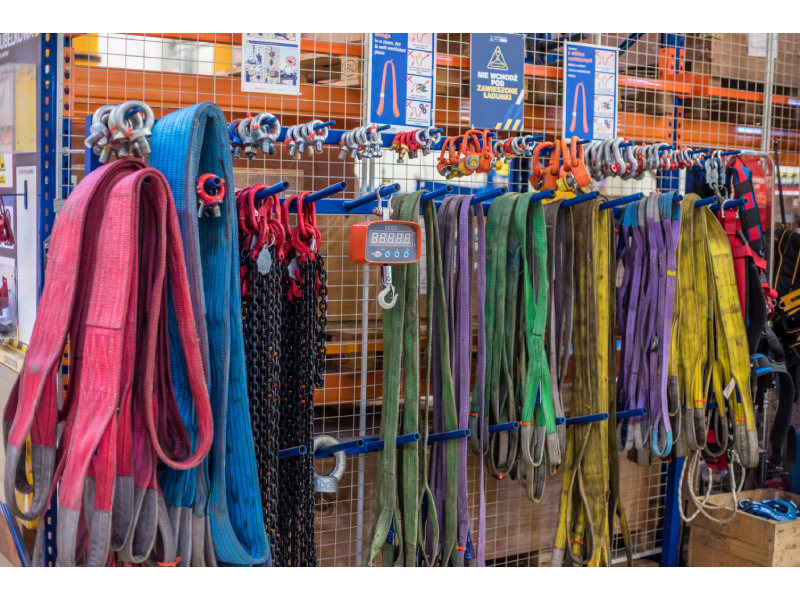
The belt suspensions are made of two layers of belts. By adding two extra layers, we can double their tonnage.
Each 30mm belt width is 1t load capacity. The colour and number of black stripes indicate the permissible operating load (DOR) of the suspension.
Depending on the colour, suspensions with lifting capacity are available:
Suspension
Colour
load capacity of 2 layers
load capacity 4 layers
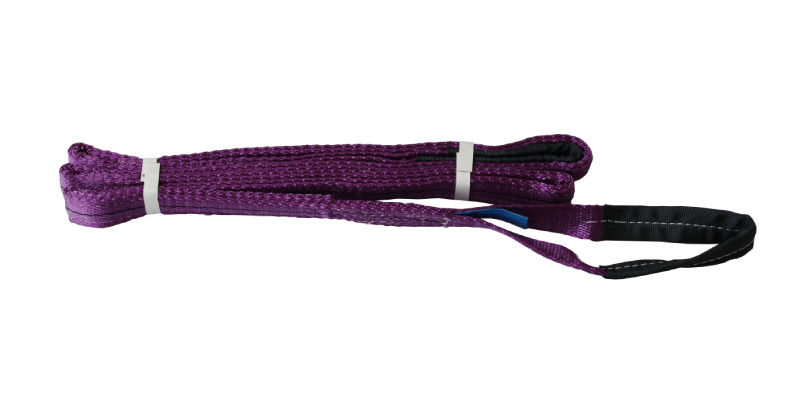
purple
1 000 kg
2 000 kg
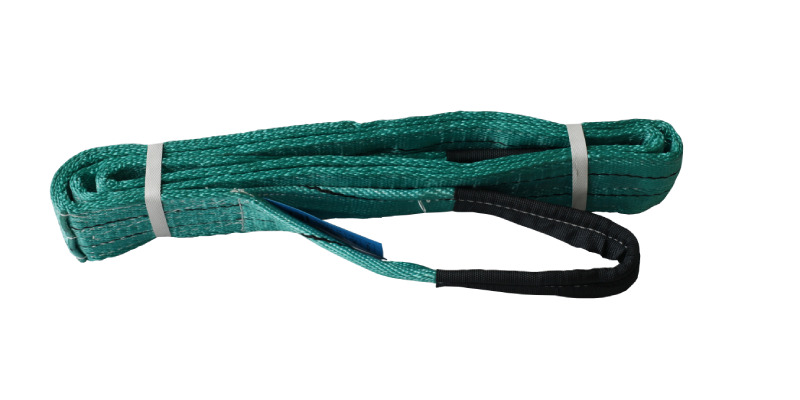
green
2 000 kg
4 000 kg
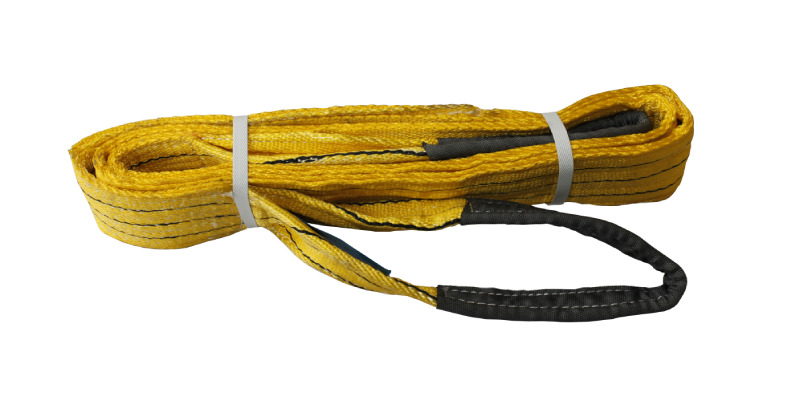
yellow
3 000 kg
6 000 kg
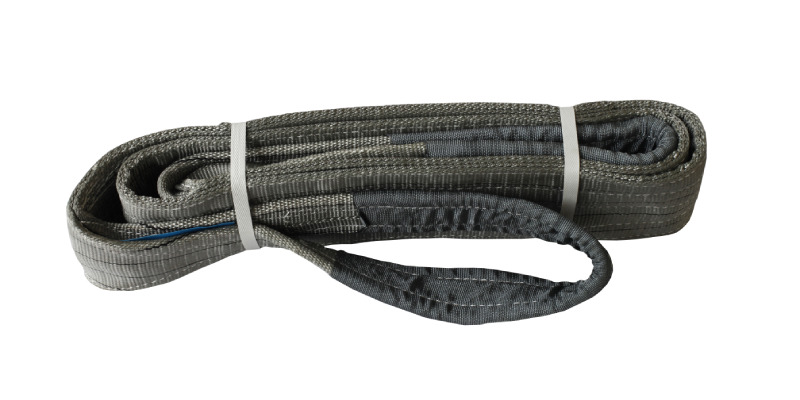
grey
4 000 kg
8 000 kg
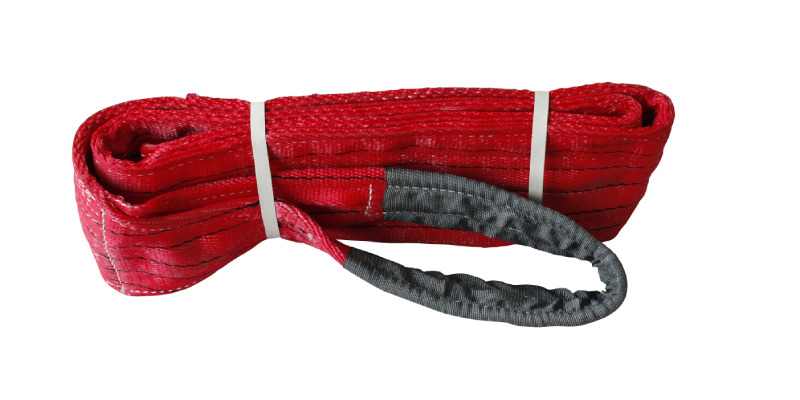
red
5 000 kg
10 000 kg

brown
6 000 kg
12 000 kg

blue
8 000 kg
16 000 kg

orange
10 000 kg
20 000 kg
Send an inquiry and we will help you to fit the right equipment.
