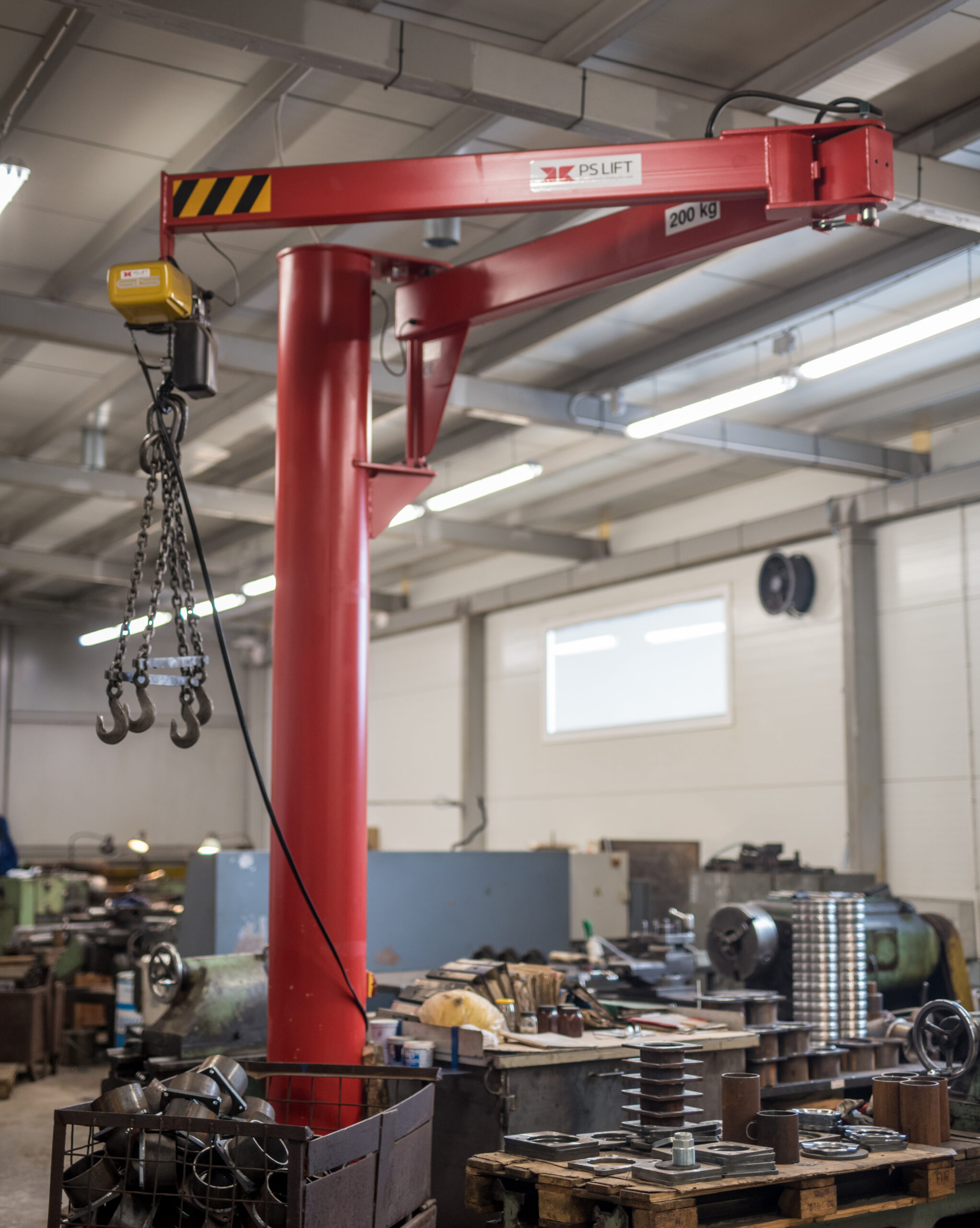
Full optimization of workstations – use of stationary cranes


How can cranes be used to optimize production processes in a given plant?
First of all, logistics solutions that will not only speed up the entire process, but also allow precise work to be done and what is important will ensure the safety of operators and their loads.
Stationary cranes, as with the rest of crane equipment, are intended to lift heavy, bulky goods. But is it just? How else do pole cranes or wall cranes work in companies?
You can read about the work characteristics, division and most important technical information on stationary cranes in an earlier article
Use of stationary cranes
It is wrong to believe that stationary cranes are dedicated only to work in production plants dealing with steel processing, welding or metallurgy.
Depending on the function of these devices, stationary cranes will accelerate production or logistics processes in companies from each industry, whether in the food, furniture, automotive, wood or heavy industry sectors.
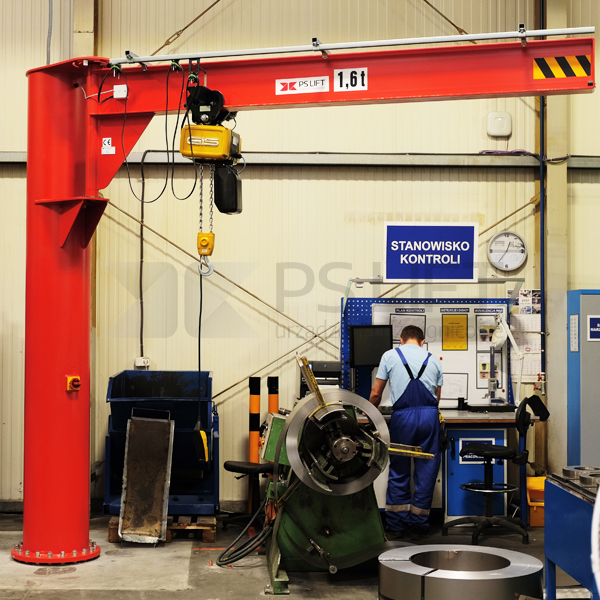
Lifting and transporting close to bulky, heavy or large-sized materials is, of course, the first thing that comes to mind when using cranes. Here, depending on the material being transferred/lifted, various lifting units will be needed suspended on the crane arm.
For many, cranes are an indispensable equipment for workshop, service and assembly stations. By using these lifting devices, the worker can sustain, transport and hang at the appropriate height the elements on which he is given to work. Stationary cranes are also used for assembly of larger structural components and for simple relocation of machines.
In the manufacture of pole and wall cranes, ergonomically put the raw material on the machines. Cutting is an inherent stage of production in many industries and in such cases cranes are very often used as a complement to the workstation with CNC machines. The assembly and dismantling of tools in the above mentioned machines are also facilitated.
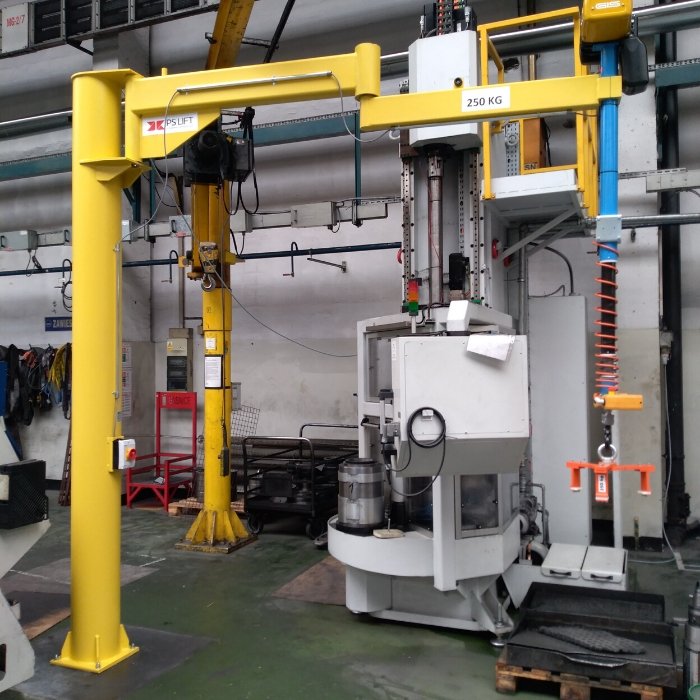
In many halls, cranes are used to put raw materials on milling machines and, after finishing the machining, to pick up a finished product, which is further relocated to the target location.

Mounting cranes is also a good idea to improve ergonomics by maximising the time of replacement of consumables, which are consumed in production processes, for example cutters.
In a slightly different environment, cranes also work when inserting injection molds on the injection moulding machine, or putting rods on the belt saw. They also complement the welding stations for auxiliary work and for welding of steel structures.
Thanks to the cranes with the use of grassers with adjustment of suspension magnets, you can catch different sizes of sheet metal for feeding on burners. A similar solution is to equip the vacuum suspension device with suction cups matching each metal sheet.

Lifting units selected on the basis of the activities carried out
What kind of lifting unit will be selected for the crane depends on the type of cargo with which the operator will come to work.
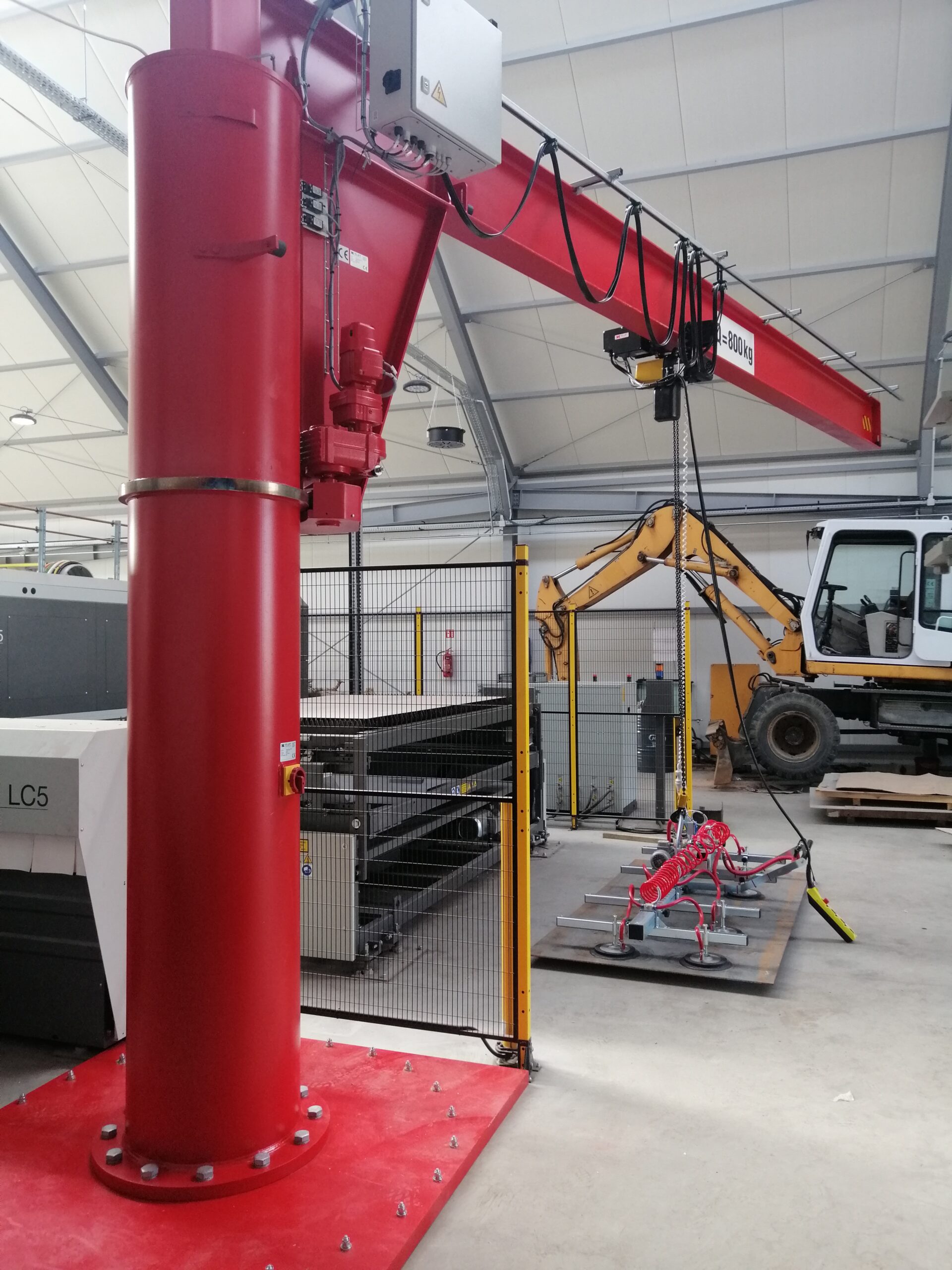
Attention should also be paid to the conditions in store/on-site, whether the work takes place in an explosive environment, whether there is access to electricity or vacuum. It is also necessary to determine whether the work will consist in lifting severalton elements, or maybe bags or cartons weighing 20kg, which will be picked up by one person in the course of the change. Perhaps a solution is needed to solve the problem of moving two-meter discs, which must be rotated and placed on the shelf. This is why every crane designed and manufactured individually to meet the needs of each customer.
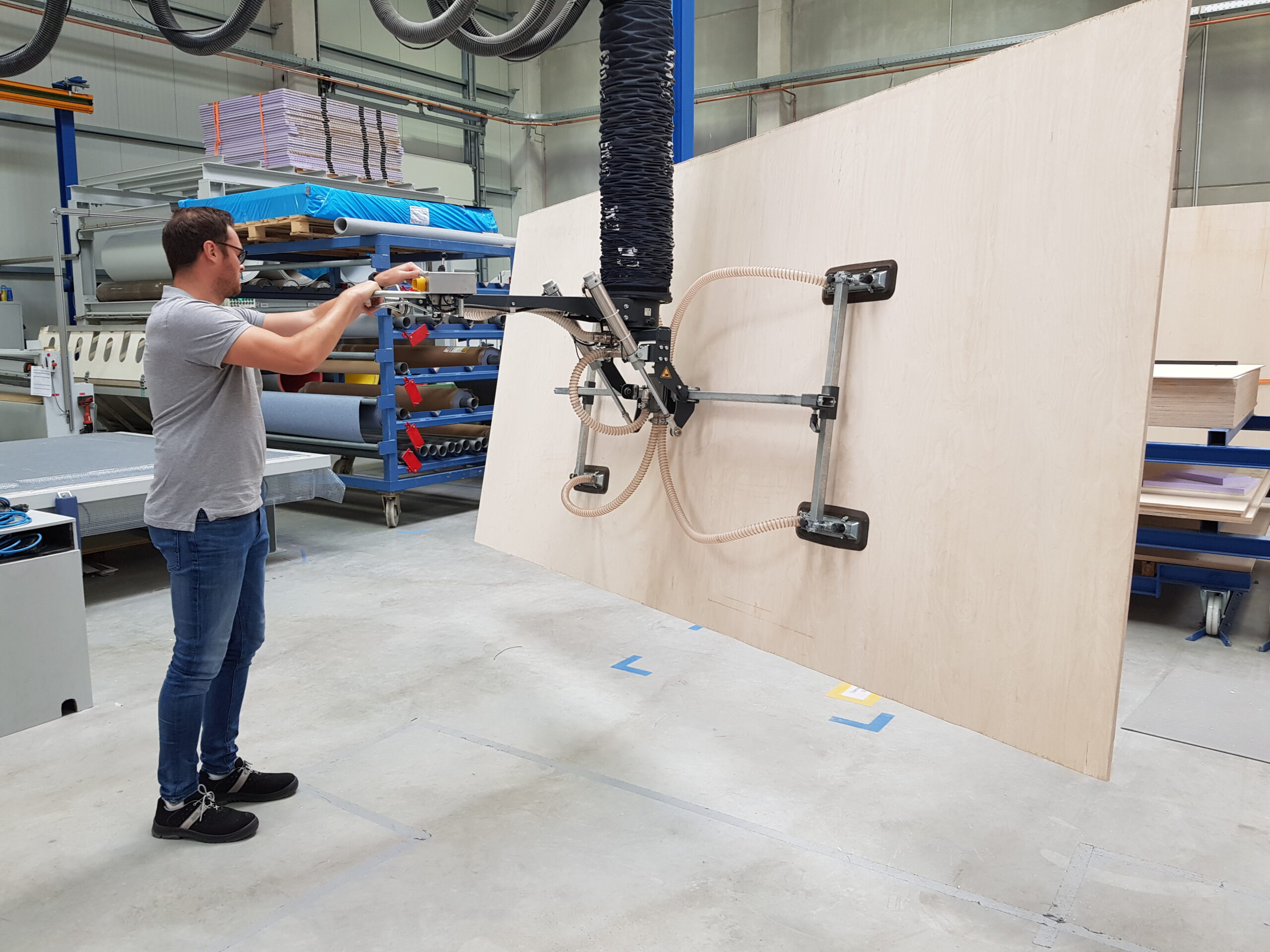
The choice of the lifting unit is also influenced by the workplace and the space around which the crane will be located. Other lifting units will be used to work in a low and tight building, others outside the building, and still others in the Ex zone.
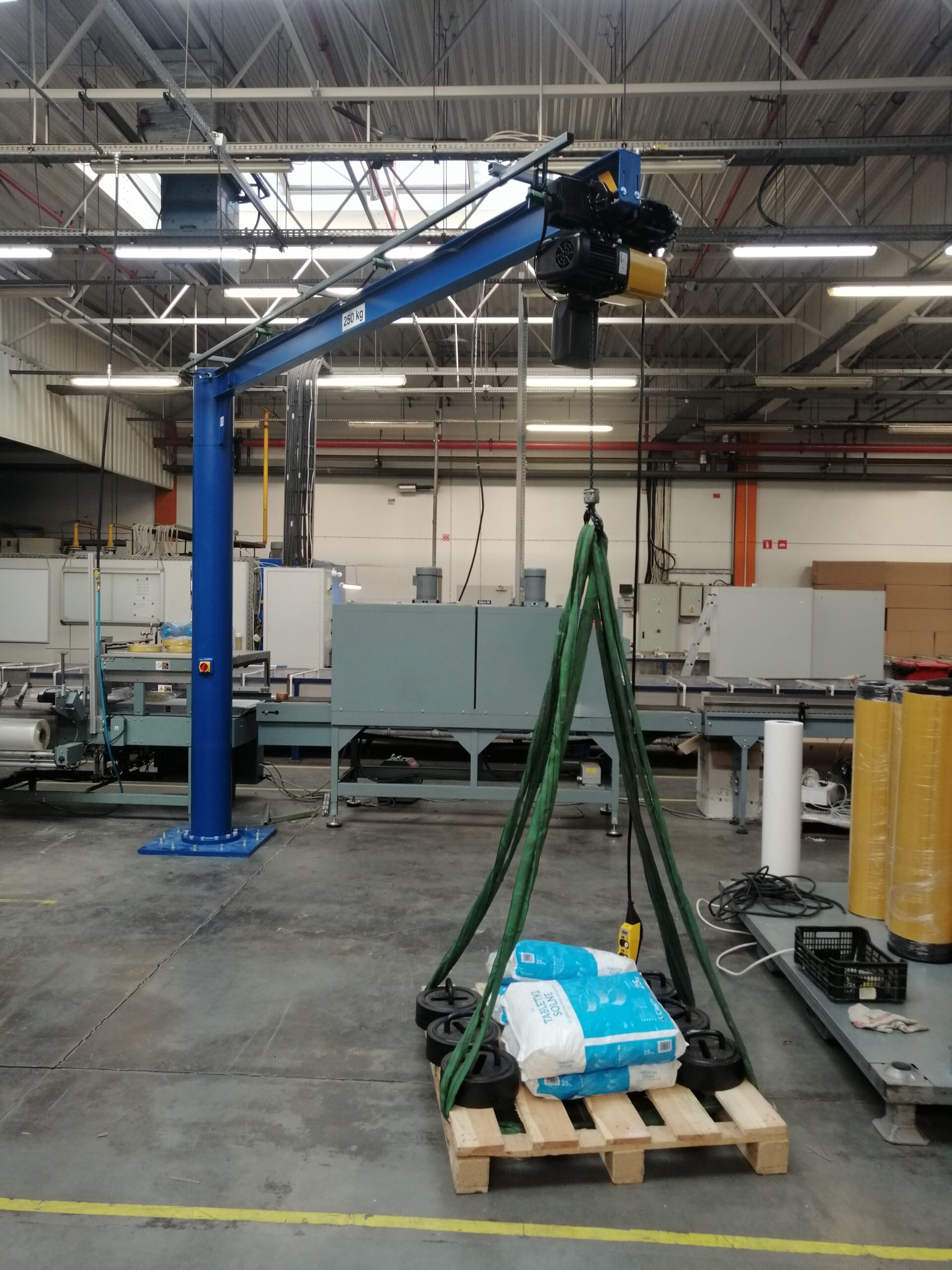
Manual and electric chain hoists, pneumatic hoists, vacuum tube lifters and vacuum lifting attachments, as well as accessories such as webbing slings, chain slings, lifting beams and clamps, are all compatible with stationary jib cranes – including freestanding, wall-mounted and articulated-arm models.
Full autonomy
Stationary cranes guarantee the operator’s independence. A single worker can do activities that previously required two or even three people to be involved.
Regardless of the size of the load raised and its weight, handling the load becomes simple, precise, faster and above all safe. All of this also affects the efficiency of the entire company.