
For production and assembly lines – industrial manipulators

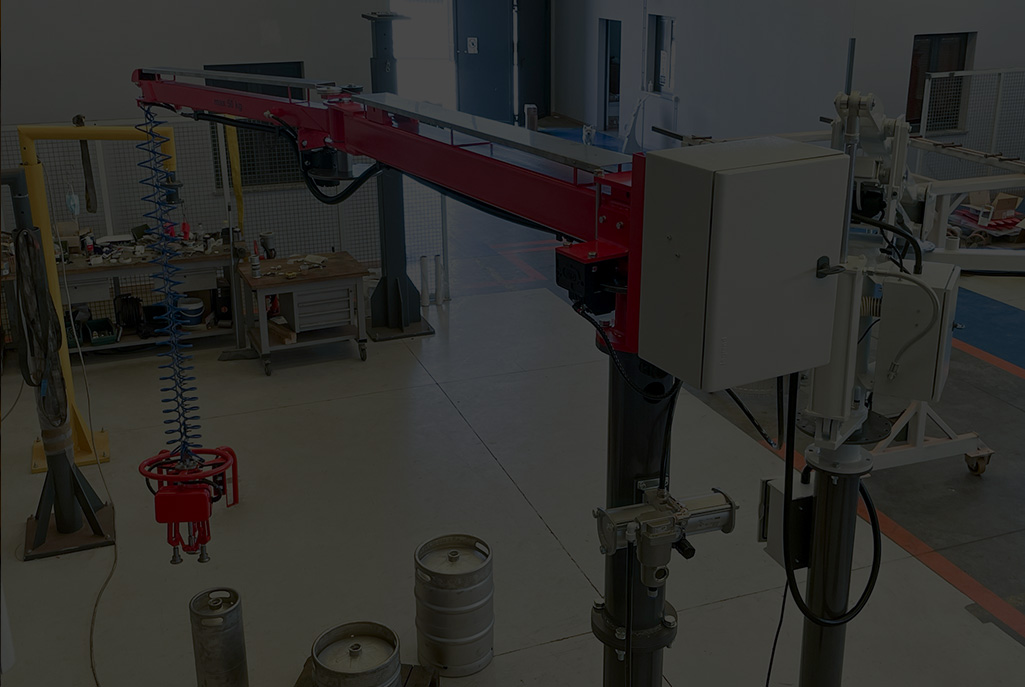
Industrial ManipulatorIt’s a mechanical hand-controlled arm. The primary use of manipulators is the multiple, repetitive transfer and deposition of cargo in every possible sector. They allow cargo to be moved virtually in any direction in the space in a particular working space.
The manipulator can be raised, tilted, and also rotated up to 180 degrees (or rotate 360 degrees if necessary).
This machine facilitates materials cutting ( saw, laser) and machining (CNC, lathes, milling machines, drilling machines, hydraulic presses). Checks for installation of pre-worked parts, service work. Improves packaging processes and loading and unloading of goods.
How it works
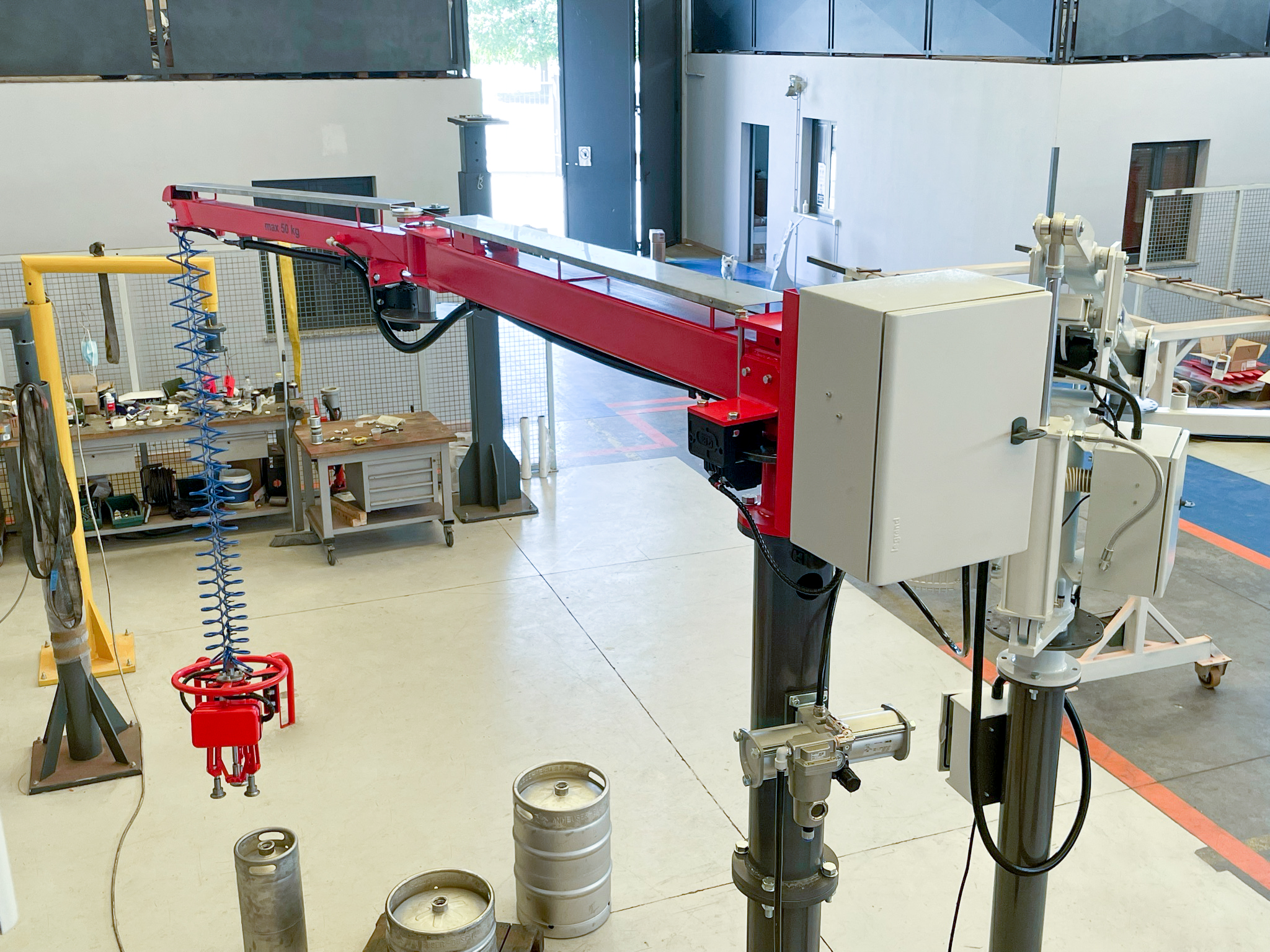
The unique design of the manipulator allows objects to move in each direction within the radius determined by the length of the arm. The area of operation of the manipulator in 3D space is a roller whose height is the height of the pole, and the radius is determined by the length of the arm.
Each weight requires adequate air pressure in the tank to compensate and balance it. This air pressure is adjusted by means of a pressure regulator placed on the device (the pressure regulator for compensation of the tool arm is located in the control box). Once the weight is balanced, a special pneumatic automatic relay detects the air pressure in the cylinder and tries to keep it steady. If we don’t move the product, it will be lifted in space.
When we exert some pressure on the product, up and down, the air pressure changes in the cylinder (because the product no longer has the original weight); and a special relay adds or removes compressed air to or from the tank. When we stop applying pressure, the relay will stop working and the product will rise again in space.
The pneumatic piston, which controls the movement of the load up and down, is controlled by a special automatic relay valve and balances the weight of the product. The operator initiates the movement to lift or lower after balance so that it can hold the product anywhere and lead it exactly to the desired position/ place.
When the product is probably captured in the grip (and the choice is huge) and the balance is activated, the weight of the load is virtually imperceptible and the transported element is carried like a “balloon” in space.
This effect allows for quick and accurate movement of the product using natural manual operator handling due to the virtually undetectable weight of the product.
Manipulators have two special pneumatic circuits for the systems: one circuit balances the weight of the arm and tools; and the other one balances the weight of the arm, tool and product.
When we have to keep the charge out of the middle or when we need to make a tilt and/or turn, we usually use a manipulator with a rigid arm. This arm can be set on a column on the floor, hung on a flange fixing from above or connected to a suspended trolley system on a simple track to move the manipulator on a large surface.
Safety in first place
The safe handling of equipment and cargo is affected by:
-
- Air tank and return valve
In the event of a sudden loss of air supply, the tank integrated with the manipulator structure shall contain sufficient air to complete the operating cycle. After final use of compressed air, the device gently descends to the ground. This way, the charge won’t fall in an uncontrollable way. - Safety valve
This device monitors the air flow in the balancing cylinder, suppressing movement of the arm if the speed exceeds the set limit. A special security that is automatically activated if the operator accidentally issues a ‘balancing’ command without cargo or if the operator issues a ‘release’ command before placing the load. - Restrictive brakes
All units are equipped with pneumatic operated brakes that effectively freeze the body before side movements and lifting units when the manipulator is not used. All brakes are activated with pneumatic buttons. Brakes are loaded with a spring and act automatically in case of insufficient supply of compressed air. - Limiters
The main and indirect axis of rotation of each manipulator shall be adjusted to limit the angular movement of the arm in case of obstacles.
- Air tank and return valve
Personalized project
Of course, adjusting the manipulator depends on the type of work done and conditions in the workplace. Therefore, the manipulator is designed for individual customer needs. Thanks to this, the device works with machines and/or supports all those that are already on site and fits perfectly into the company’s characteristics.
Parameters, detailed technical information on manipulators are available at:
Contact specialists to choose the best solution